Hendey Lathe

Figure 1: 1905 15”x36” Hendey.
My Hendey lathe was manufactured in 1905. It has a turning capacity of 15” diameter x 36” between centers. It is a “cone head” model, meaning that the spindle runs in a tapered bronze bushing that is drawn tight by a nut at the rear of the spindle. The Hendey is equipped with a W.P. Norton quick change gear box (Figure 2), and a taper turning attachment (Figure 3). The head stock was manufactured for flat belt drive from an overhead countershaft, but had been retrofitted with a V-belt pulley over one of the cone steps for driving from the pulley of a 4-speed gear box probably supplied by Hendey (Figure 4). Hendey lathes had a reputation for being massively built, making them very rigid machines. With motor and transmission, the Hendey lathe weighs a little over a ton.

Figure 2: Norton Gear Box. Standard thread pitches from 1.5 through 80 TPI are provided. Note the patent date of March, 1892.
Hendey’s design for electric motor drive was to mount the motor and transmission overhead of the headstock on a large cast iron support bracket that would bolt to the rear of the bed, but my cast iron bracket was broken. I didn’t much like the idea of motor and transmission mounted high overhead, so I re-engineered the mount to have the transmission at the front driven by the electric motor at the rear (Figure 5). The top speed is about 540 rpm. Low speed is about 130 rpm. Enabling the back gear for speed reduction reduces the low speed to about 15 rpm.
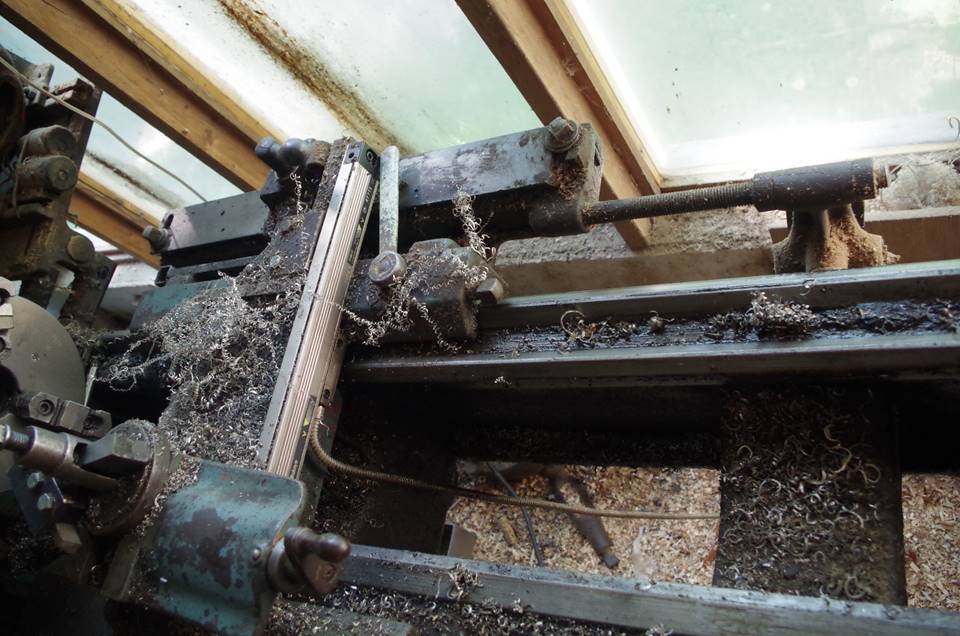
Figure 3: Hendey taper attachment. The Mitutoyo scale mounted to the cross-slide is my retrofit.

Figure 4: Transmission mount and headstock drive. A V-belt ring is installed over the flat belt headstock pulley and was probably supplied by Hendey. The transmission also appears to be the factory supplied original.

Figure 5: Electric motor, transmission, and head stock gearing. Several of the gears are steel that I manufactured to replace the damaged cast iron originals. The motor is 2 HP and was originally a three-phase machine, but I rewound it to run on single-phase power as I don’t have a three-phase line.
I retrofitted the Hendey with Mitutoyo AT-715 magnetic scales and a Mitutoyo 2-axis DRO, giving measurement resolution of 0.0001” (Figure 6).

Figure 6: Hendey lathe upgraded to the modern era with Mitutoyo digital readout mounted on the wall overhead. The 40” X-axis magnetic scale is visible at the bottom of the bed. Mitutoyo specifies the scale to be accurate within a few microns over the full length.
Basic specifications:
Capacity: 15” x 36”
Spindle bore: 1”
Head stock taper: MT4
Tailstock taper: MT3
Speeds: 4 (8 using the back-gear reduction); 130, 270, 390, 540. Back-gear reduction ratio: ~8.5
Motor: 2 HP, originally three-phase, but rewound for 120V single-phase.
Threading capability: English, 1.5-80 TPI.
Weight: Approximately 2500 lbs.
A good description of the history of the Hendey company and its products can be found here:
http://www.lathes.co.uk/hendey